
Rock Steady Crew at 37: Breaking, Discipline, and Legacy


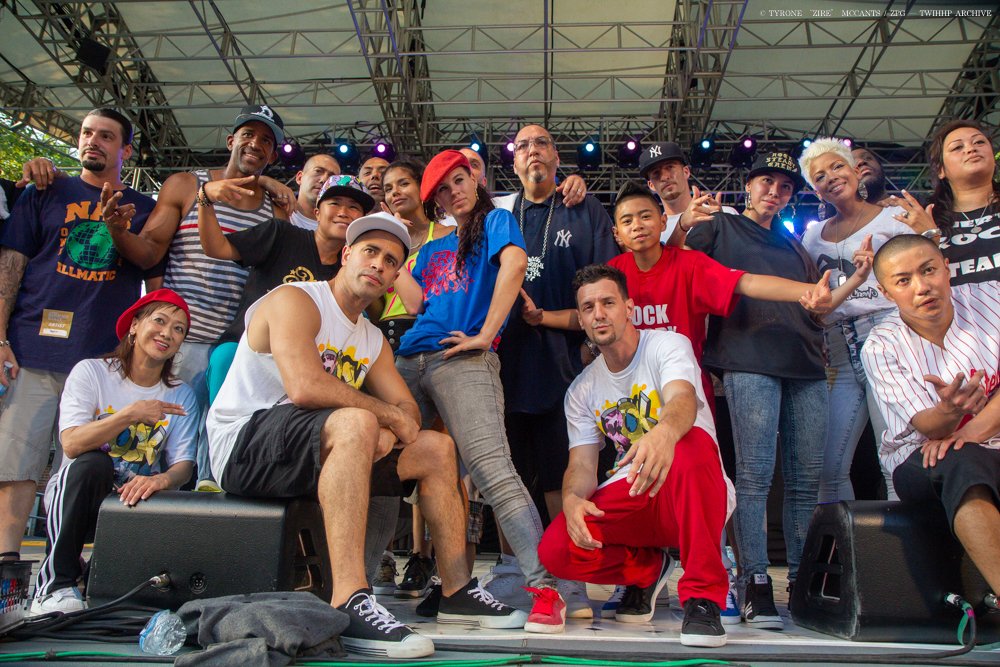
Crazy Legs at the Rock Steady Crew 37th Anniversary Concert, SummerStage, New York City, 2014. Photograph by Tyrone “Zire” McCants.
Everyday People · 37th Anniversary Concert · New York City
Rock Steady Crew: Breaking, Discipline, and the Global Language of Movement
How a Bronx crew carried breaking from neighborhood circles to stages around the world, and why the crew itself became the school.
Before breaking had judges, it had witnesses. A circle formed, the break came around, and a dancer stepped in to be measured by people who already knew the standard.
That is the world Rock Steady Crew came out of. Long before films, festivals, or international stages, the crew was a group of young dancers in the Bronx practicing, testing each other, and building a reputation one circle at a time.
In 2014 the crew marked 37 years with its annual anniversary concert at SummerStage, the free outdoor festival in New York City’s parks. These photographs come from that celebration: the crew’s president, its dancers, and the generations of b-boys and b-girls who carry the name.
Movement From the Bronx
Rock Steady Crew was founded in the Bronx in 1977. B-boys Jimmy Dee and JoJo are credited at its start, and the crew grew from practice and recruitment rather than from any institution. Skill came first. Reputation followed.
A few years later, a young dancer from Manhattan named Richard Colón, known as Crazy Legs, asked the founders for permission to build a Manhattan chapter. He was president by the time he was a teenager, and he has remained the crew’s best-known face ever since.
Dance as Athletic Intelligence
Breaking is often reduced to its most spectacular moves. The deeper discipline is quieter and harder to see. A dancer has to understand the music while controlling the body under pressure, and every part of a round asks for something different.
- PowerConditioning, built over years
- FootworkPrecision, close to the floor
- FreezesTiming, held on the beat
- The battleStrategy and psychological control
That combination is why breaking can be called both art and sport without either label containing it. When breaking made its Olympic debut at Paris 2024, the wider world saw the athletic side. The circle had known it for decades.
From Local Circles to the World
Films and documentaries in the early 1980s, including Wild Style, Style Wars, Flashdance, and Beat Street, put Rock Steady Crew in front of audiences far from the Bronx and helped ignite international interest in breaking.
Visibility expands a culture, but it can also pull a form away from its origins. Preservation means naming the communities, crews, and practices that built the movement before the cameras arrived.
A crew can become a school without ever looking like one.

The Crew as Institution
Rock Steady Crew’s longevity comes down to structure. Members change, but a crew can hold standards, names, stories, and methods across generations. Today the name extends well beyond New York, with members and chapters across several countries.
The legacy isn’t only the moves audiences remember. It is the disciplined handoff of knowledge from one dancer to the next, the kind of teaching that happens in practice spaces and circles rather than classrooms.
For TWIHHP, that is the reason to photograph a crew like this one: to record the people who carry the form, by name, so the archive shows who kept the culture moving.
Visual Archive Gallery
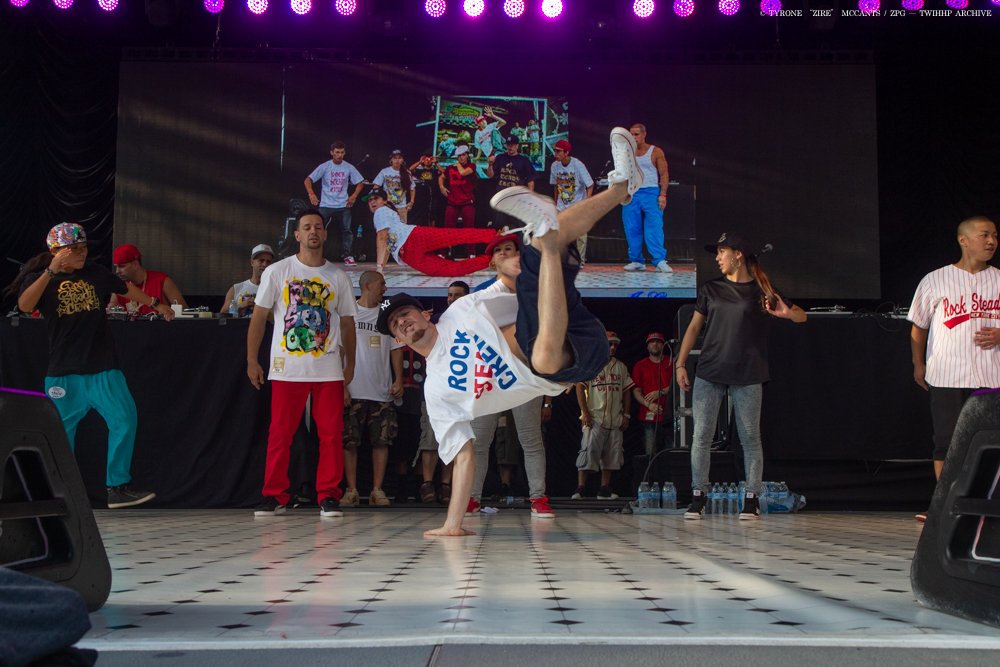
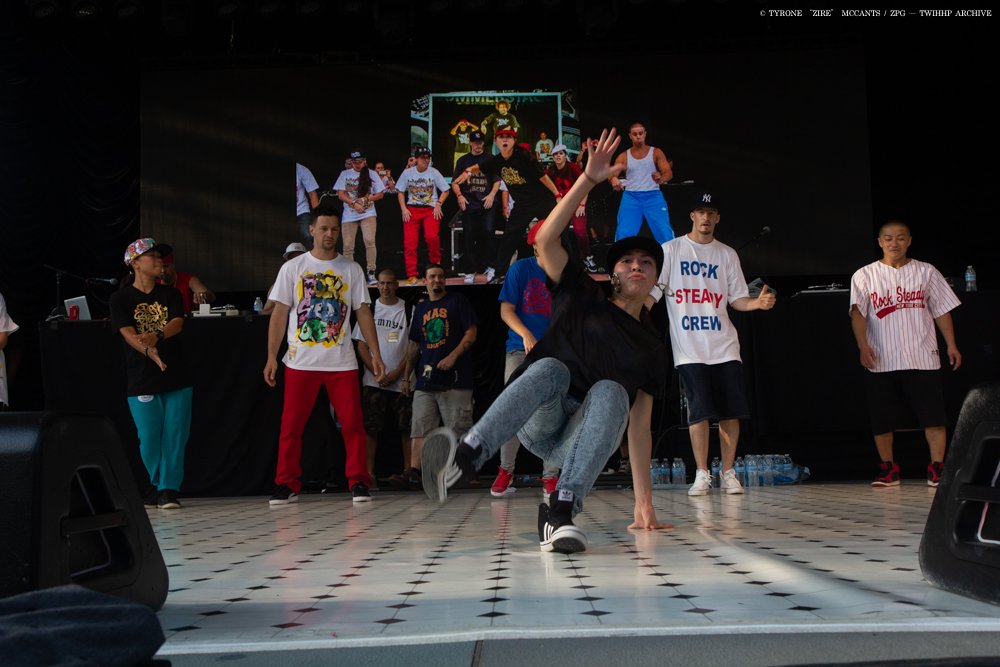
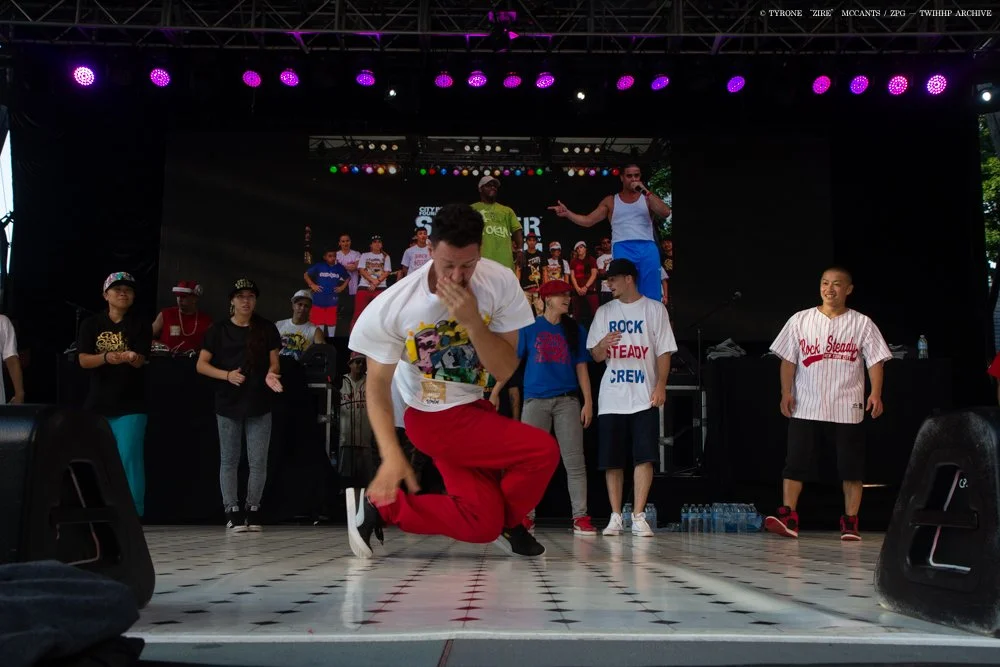
All photographs from the Rock Steady Crew 37th Anniversary Concert, SummerStage, New York City, 2014.




The Story in Their Own Words
The crew now has its own book. Rock Steady for Life: Bringing Breakdancing to the World, by Richard “Crazy Legs” Colón and The Rock Steady Crew, with a foreword by Big Daddy Kane, was published by Rizzoli in September 2026.
The publisher presents it as a fifty-year celebration of b-boy culture. It draws on never-before-published images from Crazy Legs’ personal albums and archives, and follows the early lives of Colón and crew members through the crew’s 1980s tours across the United States, Canada, Japan, and Europe.
Photographs like the ones on this page show where the crew stood in 2014. The book goes back to where it started, told by the people who were there.
The crew’s site, RockSteadyCrew.life, is the home for the book and what surrounds it: the archive, the tour schedule, press, speaking engagements, and a waitlist for signed copies.
Related Archive Pathways
Who Carries It Forward
Breaking traveled the world because people carried it there with commitment. Thirty-seven years after a few Bronx b-boys gave the crew its name, Rock Steady Crew was still gathering its people in New York to celebrate, and the dancers photographed that day are part of how it continues.
A move can be copied from a video. A standard has to be passed on by someone who lived it. That is what a crew protects, and it is what an archive should remember. Now, with Rock Steady for Life, the crew has put its own record on the shelf beside it.
