
Errol Hosea King: A Street Photographer named Mr. Neighborhood
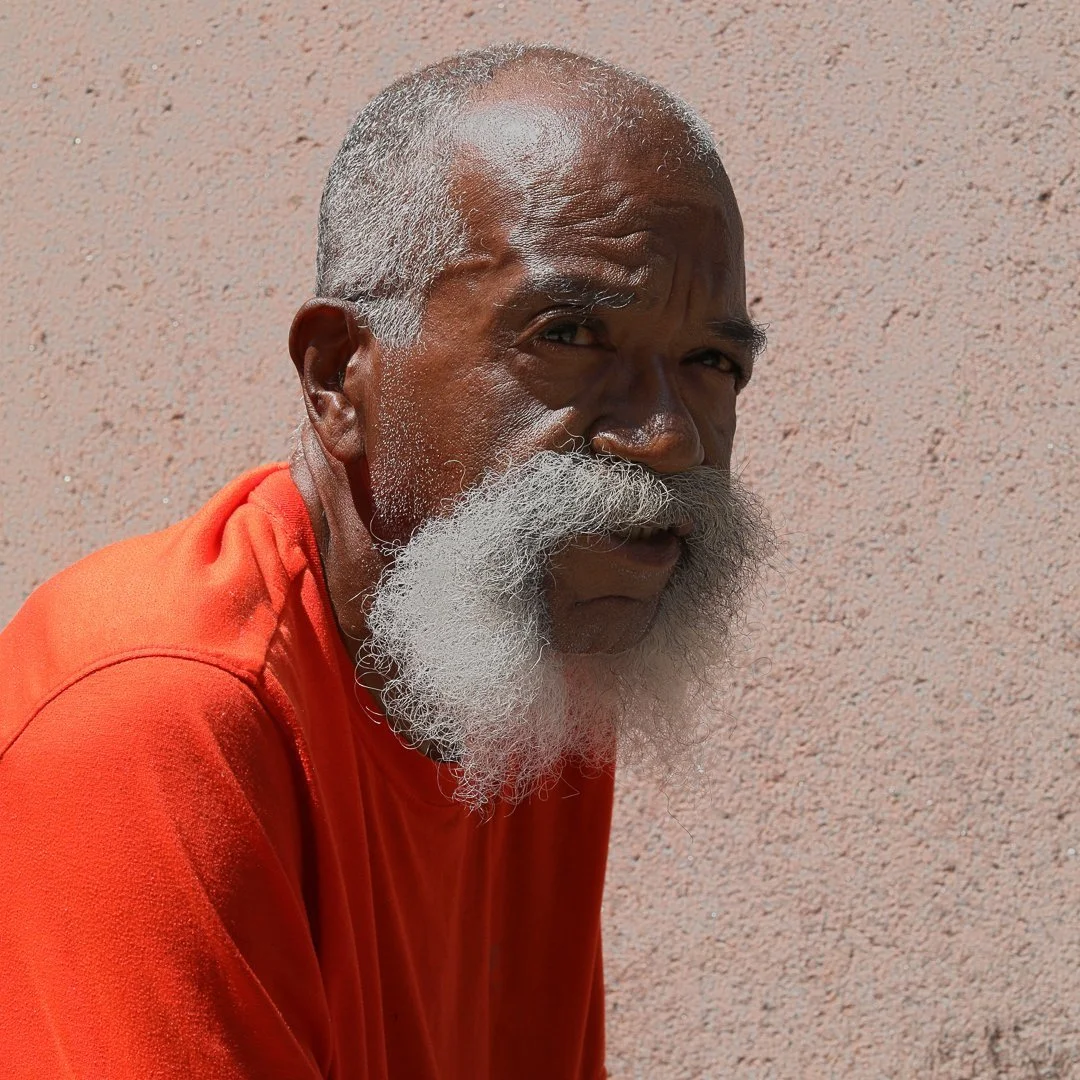
sits outside in downtown, St. Louis, with his white beard and long white mustache, dressed in a bright orange shirt, gazes thoughtfully into the distance. The background is a simple, neutral surface, highlighting the contrast.
Where Some See Streets, He Sees Stories
St. Louis has visual griots who hold the city's memory through presence and observation. Errol Hosea King, known as Mr. Neighborhood, stands among them. His photographs preserve laughter on stoops, the posture of elders, aging architecture, overlooked alleys, and the visual character of Black neighborhoods.
Early Attraction to Form
King's interest began in childhood through Art Deco lines, architectural symmetry, and the way light moved around buildings. The language of photography came later, but the discipline of looking began early.
Training, Restriction, and Resolve
During his time in the Navy, photography became a professional path. Despite skill and training, he encountered institutional limitations shaped by racism. He refused to allow those restrictions to define the size of his vision. Civilian work as a press and news photographer in California strengthened his understanding of timing, light, and human connection.
Mr. Neighborhood
Known as Mr. Neighborhood, Errol Hosea King photographs St. Louis with patience, color, dignity, and the trust of a man who belongs to the streets he documents.
Returning to St. Louis gave the work its deepest context. King approaches subjects without hierarchy. People, streets, still life, architecture, and nature all receive attention. His strength is not intrusion but presence. He observes, builds trust, and records without stripping people of dignity.
Color, Faith, and Readiness
King's compositions carry vibrant blues, urgent reds, and earth tones rooted in the city. His belief that 'the shot is always around' reflects readiness and humility. The camera does not create the world. The photographer must remain alert enough to recognize what is already present.
A Cultural Record
At seventy, King's work remains active and curious. He is a visual historian, neighborhood archivist, mentor, and witness. His images show that ordinary life becomes testimony when someone photographs it with discipline and respect. His legacy is not only what he captured, but how he taught a city to see itself.
