
Two Bridges, One City
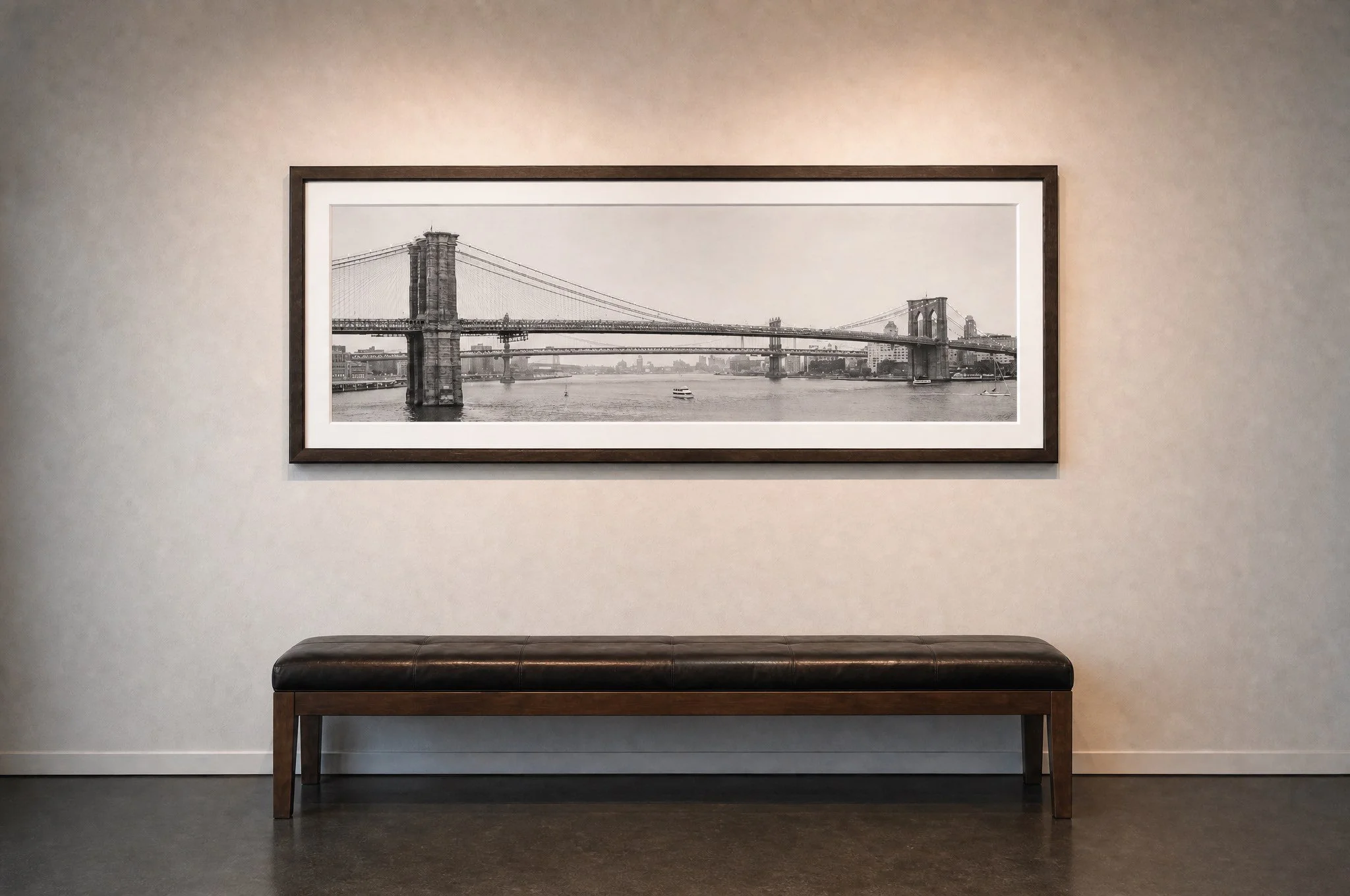
Two of New York City’s most recognizable crossings meet within one expansive black-and-white panorama.
Two Bridges, One City brings the Brooklyn Bridge and Manhattan Bridge together across the East River, creating a layered study of architecture, movement, history, and connection.
Created by photographer and visual storyteller Tyrone “Zire” McCants, this fine-art photograph transforms the structural rhythm of New York into a timeless statement for homes, offices, studios, hospitality spaces, and private collections.
Featured Framed Editions
These sizes refer to the complete framed presentation. The panoramic photograph remains uncropped within the frame and is surrounded by generous white or warm-white matting.
Presentation: 16 × 24 inches
Recommended Placement: Office, hallway, entryway or intimate display
Presentation: 20 × 30 inches
Recommended Placement: Living room, bedroom, studio or above a console
Presentation: 24 × 36 inches
Recommended Placement: Large wall, reception area or statement installation
Two Bridges, One City takes another view.
The panoramic photograph stretches horizontally across the East River, allowing the Brooklyn Bridge and Manhattan Bridge to share the frame. Instead of isolating one landmark, the image presents the bridges as part of a connected urban system—two eras of engineering, two distinct silhouettes, and one continuously moving city.
The Brooklyn Bridge occupies the foreground with the authority of an established monument. Its stone towers and dense web of suspension cables create weight, order, and permanence. Behind it, the Manhattan Bridge introduces another layer of structure, extending across the water and into the surrounding cityscape.
The decision to present the scene in black and white transforms the photograph from a travel image into an architectural study. Silver highlights trace the cables. Charcoal shadows define the towers. Soft gray atmosphere separates the bridges from the buildings beyond. The surface of the river becomes a field of subtle texture rather than color.
A boat near the center provides scale and movement. It reminds the viewer that these structures are not frozen monuments. They remain part of everyday life—crossed, passed beneath, photographed, remembered, and experienced by generations.
The panoramic format is essential to the work. It gives the bridges room to extend and allows the viewer’s eye to travel slowly across the composition. At larger sizes, the photograph becomes almost environmental, placing the collector in front of the river rather than merely showing them a picture of it.
This is a portrait of New York built through connection.
Not simply two bridges.
Two passages through history, architecture, labor, migration, memory, and movement.
