
Ptah Williams St. Louis Jazz Pianist


JAZZY NIGHTS & BLUES | BLINK STL
Ptah Williams: The St. Louis Pianist Who Makes Space Inside the Music
His playing joins technical command with the listening, restraint, and movement that allow a jazz ensemble to breathe.
The Piano as an Entire Landscape
Density when the music needs weight. Air when it needs room.
A pianist can shape a band without demanding the center of every frame.
Ptah Williams works through touch, timing, harmony, and the ability to decide when the music needs density and when it needs air.
In photographs, that intelligence appears through concentration. Hands move, but the face often reveals the listening that guides them.
“The strongest image is not necessarily the largest gesture.”
It may be the moment before the chord lands.

The Dark Room / The Grandel Performing Arts Theater · St. Louis, Missouri. Kendrick Smith led the ensemble with Ptah Williams on piano, Bob DeBoo on bass, and Marty Morrison on drums. Hosted by the Kranzberg Arts Foundation, Jazz St. Louis, and WSIE 88.7 The Sound.
In His Own Words · The Beginning
The piano was already in the house. The connection came naturally.
In our Jazzy Nights & Blues interview, Williams described a musical foundation that began with curiosity at home, developed through formal training, and eventually opened into jazz.
“I was drawn to it.” Ptah Williams · Jazzy Nights & Blues Interview
Williams recalled an old Howard upright piano in the family home while his brother was taking lessons. He said the first piece he attempted was Johann Sebastian Bach’s “Jesu, Joy of Man’s Desiring,” which he learned by ear.
“I learned it by ear.” Ptah Williams
His mother added another requirement: if the children were going to study music, they were also going to learn how to read it. That combination—ear, reading, and formal study—became part of a much wider musical vocabulary.
Violin, piano, youth symphony, classical repertoire—and jazz by choice.
Williams said he played violin in youth symphony and performed a piano concerto with the youth symphony when he was 12. His classical background remained part of his practice, but jazz became the music he chose for himself.
“The jazz was something that I just fell in love with on my own.”
A St. Louis Musician With National Reach
National jazz history. Continued local presence.
Williams is rooted in St. Louis and has performed with major jazz figures, including Freddie Hubbard, George Benson, and James Moody.
That range places him inside national jazz history while his continued connection to St. Louis keeps the story regional and personal.
This combination matters. Cities maintain musical identity when accomplished artists remain visible within local scenes, work with other musicians, and give audiences repeated opportunities to hear the craft at close range.
Performance Context · The Grandel
A St. Louis ensemble built around shared musical awareness.
Performance Images 1 and 2 come from the All Star St. Louis Jazz Festival at The Dark Room / The Grandel Performing Arts Theater in St. Louis, Missouri.
Led by saxophonist Kendrick Smith, the group featured Ptah Williams on piano, Bob DeBoo on bass, and Marty Morrison on drums. The event was hosted by the Kranzberg Arts Foundation, Jazz St. Louis, and WSIE 88.7 The Sound.
That context matters because the photographs are not anonymous stage images. They belong to a specific St. Louis performance, a specific ensemble, and a network of institutions helping keep the city’s jazz culture visible.

Kendrick Smith led the group with Ptah Williams on piano, Bob DeBoo on bass, and Marty Morrison on drums at The Dark Room / The Grandel Performing Arts Theater. Kranzberg Arts Foundation, Jazz St. Louis, and WSIE 88.7 The Sound hosted the event.
Collaboration as Mastery
The solo only works inside collective awareness.
Jazz culture often celebrates the solo, but the solo only works inside collective awareness.
Williams demonstrates mastery through how he supports the ensemble, redirects energy, and responds to what another musician offers.
That makes his work relevant beyond music.
Leadership can be heard in the ability to create space, strengthen another voice, and move the whole group without erasing individual character.
Rhythm, Flow & Time
“I just go with the flow.”
When I asked where the shifts, textures, and changing musical ideas come from, Williams did not describe a rigid formula. He described feel, time, and the difference between carrying a solo performance and working inside a rhythm section.
“I just go with the flow, you know, with the rhythm and the flow.”
He explained that playing a great deal of solo piano taught him how to balance his own time. Playing with a rhythm section demands another awareness. In his approach, those two experiences meet: independence without losing the ensemble.
“There’s a difference when you’re playing with a rhythm section and solo piano. So I kind of apply both of them.”
That interview answer gives more context to what the photographs suggest visually: concentration is not isolation. He is listening while shaping time.
The Pianists Who Opened the Door
A lineage of touch, invention, rhythm, and harmonic possibility.
Asked which pianists still blow him away, Williams named a broad line of major influences.
“Those were my major influences.”
The list helps explain the range visible in his playing: tradition and experimentation, orchestral awareness and improvisation, density and space.
The Visual Archive
Touch, attention, performance, and local presence.
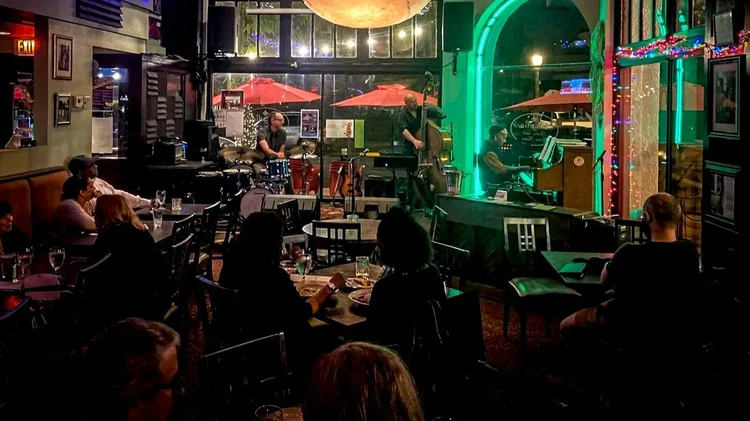
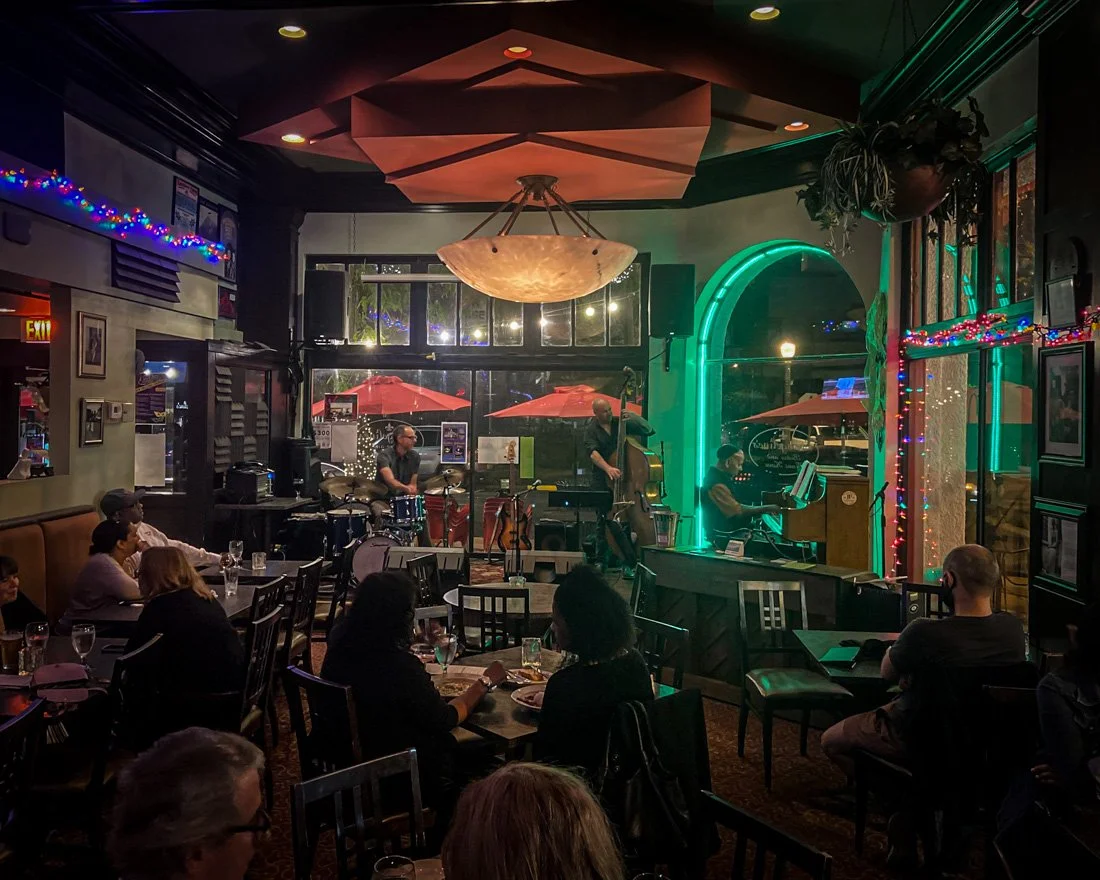
The archive separates three kinds of evidence: interview portraits carrying Williams’s own words, performance images from the All Star St. Louis Jazz Festival at The Grandel, and later performance photographs from Evangeline’s Bistro and Music House.



Inside the Music
Touch. Timing. Space.
The profile is less about spectacle than the intelligence connecting physical technique to collective awareness.
The physical relationship to the instrument.
Technical command begins with how sound is physically shaped and controlled.
Knowing when the chord belongs.
The moment before a chord lands can reveal as much musical intelligence as the sound itself.
Strengthening another voice.
Restraint allows another musician, another phrase, and the ensemble as a whole to remain present.
A Career Memory · 1987
North Sea Jazz Festival: one of the moments that stayed with him.
When I asked for a performance memory that made him feel the scale of where music had taken him, Williams returned to his first trips to Europe.
“I did the North Sea Jazz Festival in 1987… that was one of the highlights.”
He described that appearance as part of a period when his music carried him abroad, while St. Louis remained the place he identified as home.
The Visible Side of Sound
Discipline, attention, touch, and listening.
In photographs, Williams’s musical intelligence appears through concentration.
The hands may move, but the strongest visual evidence is often quieter: posture, attention, timing, expression, and the awareness connecting one musician to the rest of the room.
The Ptah Williams archive preserves the visible side of sound: discipline, attention, touch, and the quiet authority of someone who knows how to make a room listen.
A Portrait of Continuity
Experience carried through a living city tradition.
The Ptah Williams archive belongs within Jazzy Nights & Blues and BLINK STL because it records a musician carrying experience through a living city tradition.
His national reach remains connected to St. Louis. His individual voice remains connected to collective awareness. His technical command remains connected to listening.
“The quiet authority of someone who knows how to make a room listen.”
The photographs preserve discipline, attention, touch, and the musical intelligence that allows an ensemble to breathe.
Continue Through the Archive
Musician, stage, and St. Louis jazz memory.
Explore related live-music stories, performance photography, and the broader BLINK STL archive.
Jazzy Nights & Blues
More live-music stories.
Jazz, blues, soul, musicians, venues, audiences, and performance memory.
The Stage
Explore performance photography.
Musicians, ensembles, instruments, venues, stage light, movement, and live atmosphere.
BLINK STL
Follow St. Louis stories.
Artists, communities, institutions, local culture, and regional memory.
Editorial Credits
Preserving musicians through image and context.
Interview excerpts were lightly edited for readability, removing repeated filler and obvious transcription noise without changing the speaker’s meaning.
