
Victor Orlando at the Phoenix Amplified Soul Experience


BLINK AZ · JAZZY NIGHTS & BLUES
The Amplified Soul Experience: Rhythm Without Borders
Victor Orlando and Lebron Dennis brought funk, Latin music, soul, and jazz into one Phoenix performance.
A Night Built Around Rhythm
Different traditions. One shared musical space.
The 2018 Amplified Soul Experience at Tempe Center for the Arts was presented as an evening of funk, Latin music, soul, and jazz.
That description was accurate, but it did not fully explain the energy of the room. The performance was built around the way rhythm can move between traditions without losing its identity.
Grammy-nominated percussionist Victor Orlando stood at the center of that exchange, with saxophonist Lebron Dennis adding melodic force and breath.
My role was to document not only who performed, but how the music traveled through bodies, instruments, light, and audience response.
Rhythm as Physical Language
Sound becomes visible before the photograph becomes still.
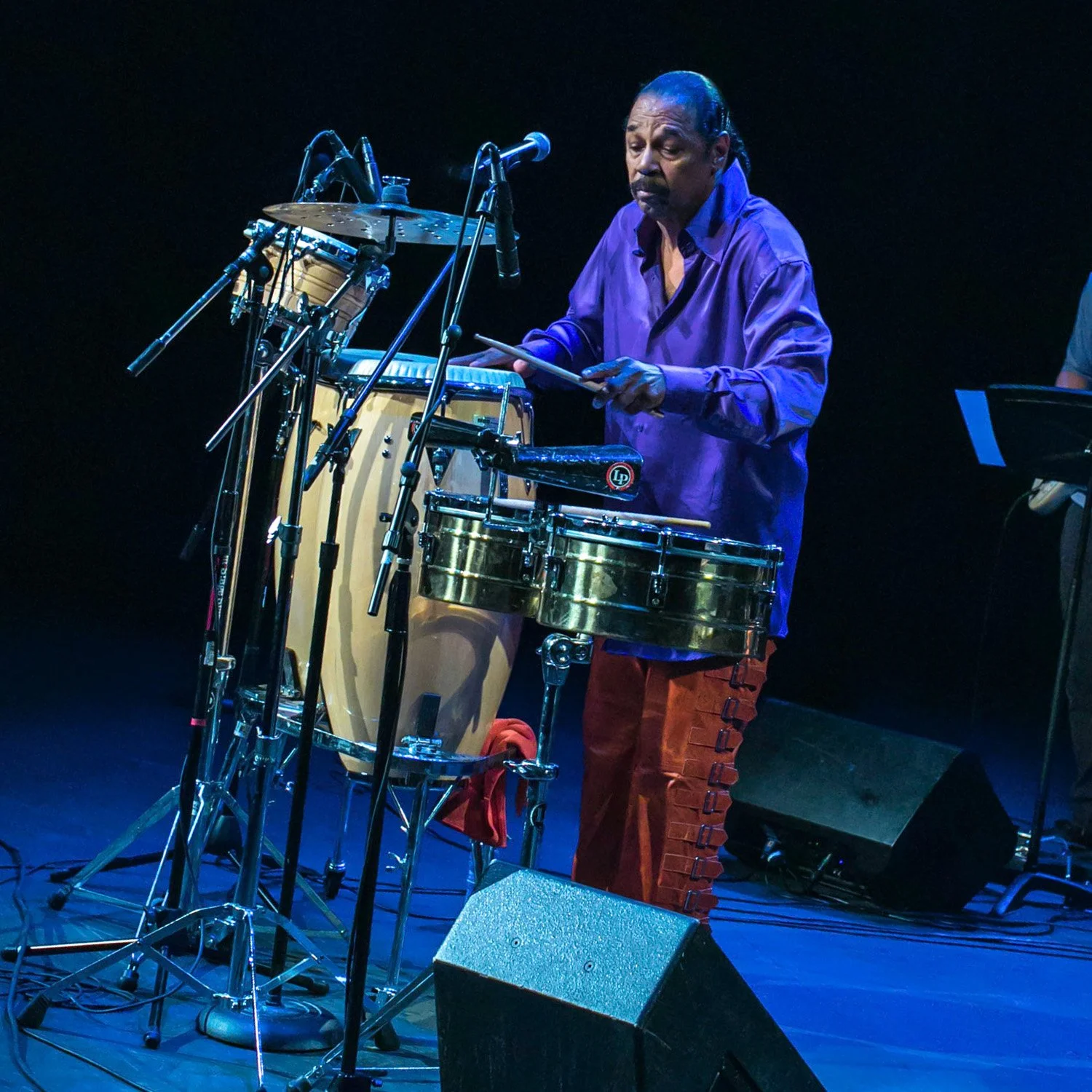
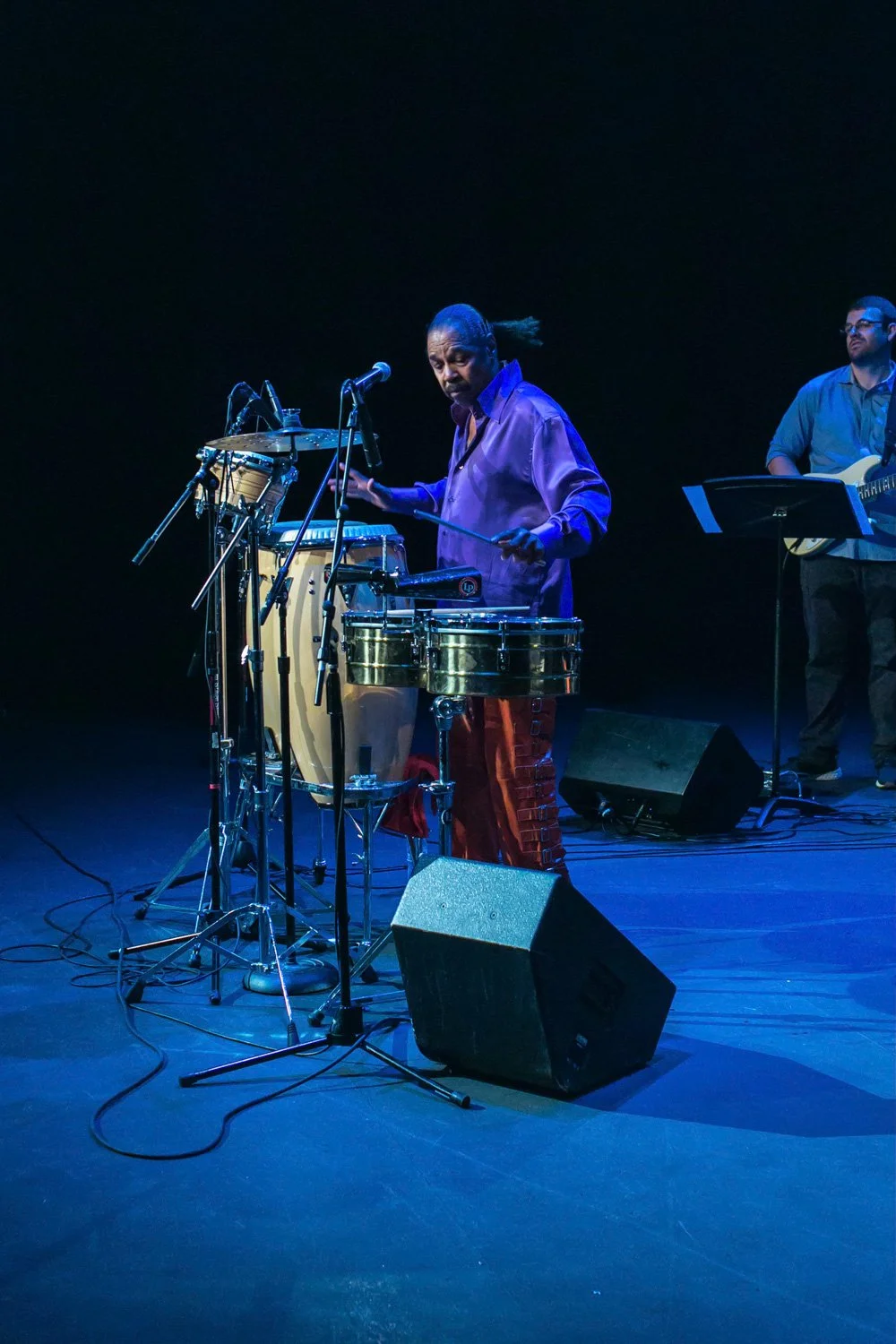
A percussionist builds energy through repetition and variation. Hands, shoulders, posture, and timing become part of the rhythm.
That physical language gives the camera something sound alone cannot: a visible record of force, concentration, movement, and control.
“My role was to document not only who performed, but how the music traveled through bodies, instruments, light, and audience response.”
Genres as Conversation
The music did not erase difference. It gave each language room to speak.
The strongest cross-genre performances do not treat musical traditions like decorations. They allow each language to enter the room with its own character.
01 · Rhythm
Funk
Funk supplied the pocket— the rhythmic foundation around which movement could gather.
02 · Expansion
Latin Music
Latin percussion expanded the rhythmic field, giving the performance additional motion and texture.
03 · Testimony
Soul
Soul carried emotional testimony— the human weight inside the arrangement.
04 · Possibility
Jazz
Jazz created room for risk, response, improvisation, and movement beyond the expected.
Percussion and Breath
Two musical forces working inside the same conversation.
The visual rhythm of the performance moved differently through percussion and saxophone. One accumulated force through repetition. The other shaped phrases through breath and space.
Percussion
Victor Orlando
Orlando stood at the center of the rhythmic exchange. His performance made repetition, variation, physical movement, and concentrated energy part of the visual story.
Saxophone
Lebron Dennis
Dennis added melodic force and breath. A saxophonist shapes silence as carefully as sound, making space itself part of the musical architecture.
“A percussionist builds energy through repetition and variation. A saxophonist shapes silence as carefully as sound.”
From a photographer’s perspective, the camera has to anticipate both.
The Performance Archive
Music becoming visible.
A performance photograph cannot reproduce what the room sounded like. It can preserve the physical architecture that produced the sound.
Phoenix, Tempe, and the Value of Cultural Range
Another Arizona existed inside the music.
Arizona is often marketed through landscape, heat, and tourism.
Events like the Amplified Soul Experience reveal another Arizona: one connected to migration, Black music, Latin influence, independent production, and audiences willing to move across categories.
Why This Belongs Here
Regional cultural life deserves a serious visual record.
That is why the event fits within BLINK AZ and Jazzy Nights & Blues.
The regional music scene deserves the same attention as the desert views and city skylines surrounding it.
Photographer’s Perspective
A photograph cannot preserve the sound. It can preserve its architecture.
The lifted hand, tightened shoulder, open mouth, angled instrument, and audience gaze become visual evidence of rhythm.
That is where performance photography becomes more than documentation of who appeared onstage. It becomes a record of how music occupied a body, a room, and a particular moment.
The camera has to recognize movement before it resolves, concentration before it breaks, and the intervals between actions that reveal how musicians are listening to one another.
“The lifted hand, tightened shoulder, open mouth, angled horn, and audience gaze become visual evidence of rhythm.”
Rhythm Without Borders
Connection without erasure.
The Amplified Soul Experience showed what happens when artists trust the connections between traditions.
Funk did not need to stop being funk. Latin rhythm did not need to lose its character. Soul remained emotionally grounded. Jazz remained open to possibility.
Victor Orlando and Lebron Dennis helped make those connections audible in the same performance space. The photographs preserve the movement surrounding that exchange.
“The result was not a blend that erased difference. It was a conversation that made each influence easier to hear.”
That conversation is what remains inside the archive: rhythm, breath, movement, place, and a night in Arizona when several musical traditions were allowed to speak to one another.
Continue Through the Archive
Follow the music, the stage, and Arizona cultural memory.
Continue from this event into related performance photography, music features, and BLINK AZ stories.
Jazzy Nights & Blues
Follow the music.
Jazz, blues, soul, funk, musicians, venues, audiences, and live-performance memory.
Various Places · The Stage
Enter the performance archive.
Concerts, festivals, live musicians, venues, stage light, atmosphere, and performance spaces.
BLINK AZ
See another Arizona.
People, public culture, performance, community, regional identity, and Arizona visual memory.
Editorial Credits
