
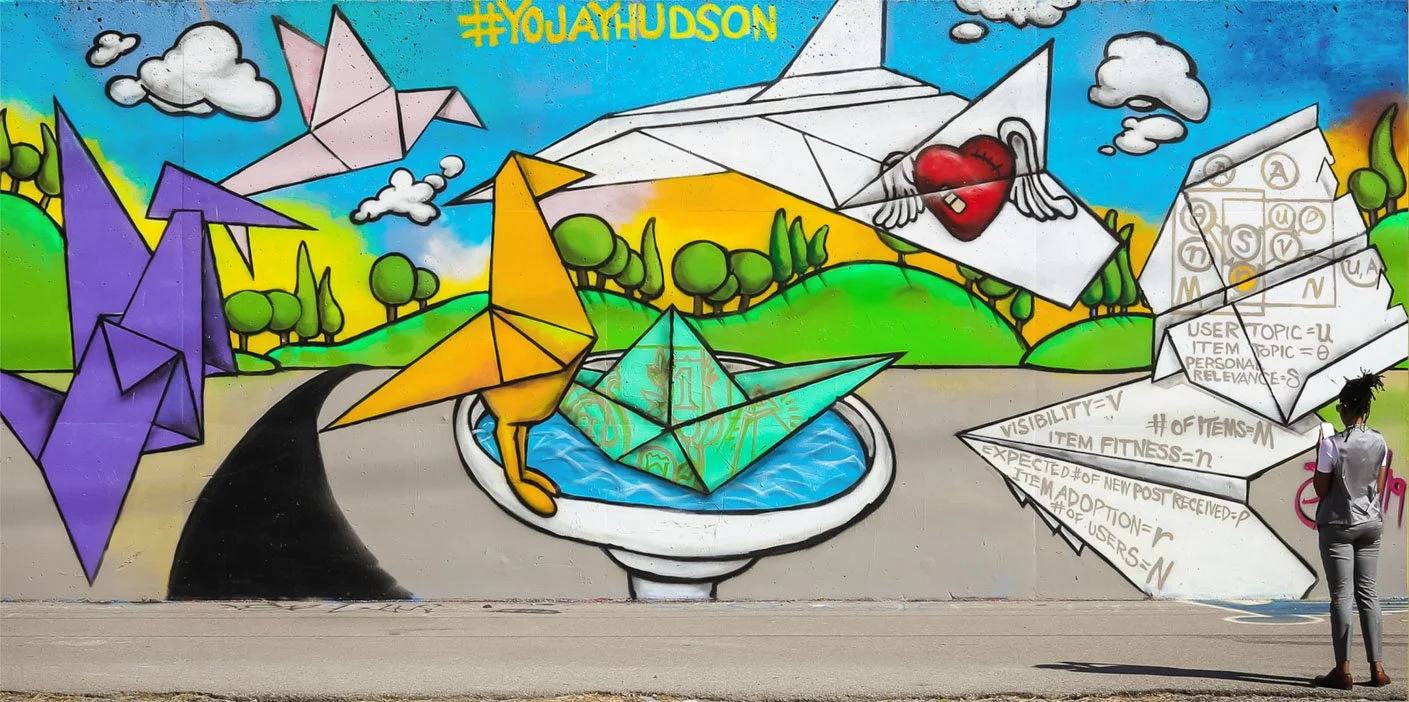
VARIOUS PLACES • EVERYDAY PEOPLE
BLINK STL FEATURE ARTICLE
The Mural Mile: Where St. Louis Paints Its Memory on the River Wall
A Living Archive of Graffiti, Community, and Cultural Expression
By Tyrone “Zire” McCants
BLINK STL • Various Places Collection (Street & City / Visual Art) • Interesting Things Collection
Zire Photography and Graphics
Details of The Mural Mile
Location: Mississippi River Floodwall, City of St. Louis
Length: Approximately 1 mile
Wall Dimensions: Approx. 15′ x 50′ sections
Year Established: 1997
Medium: Paint, graffiti
Organized By: Paint Louis
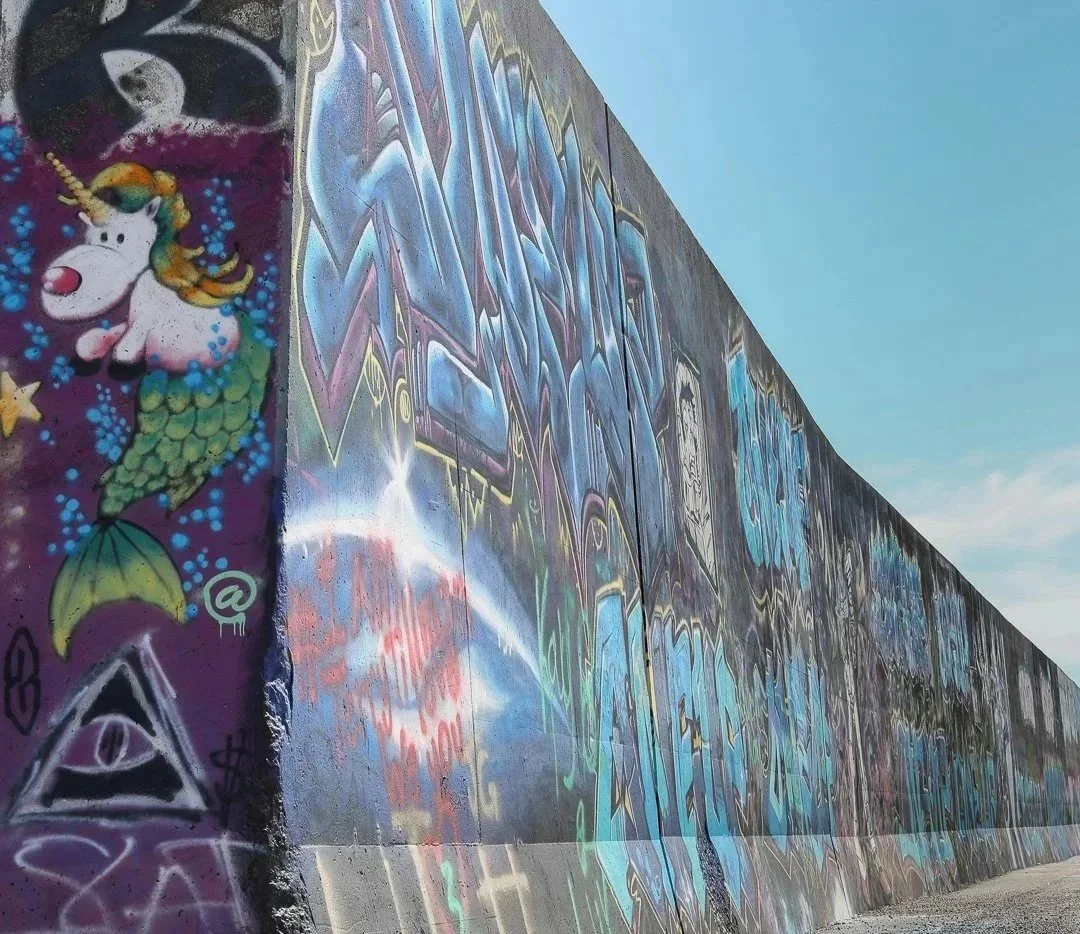
A Wall That Refuses Silence
Running alongside the Mississippi River floodwall in downtown St. Louis is a mile-long stretch of concrete that does something rare for infrastructure: it speaks. Loudly. Colorfully. Honestly.
Known as The Mural Mile, this wall isn’t decoration. It’s a living archive—one that documents decades of artistic voices, subcultures, and visual languages layered over time. When you stand in front of it, you’re not looking at a single artwork. You’re standing inside a conversation that’s been going on since 1997.
I photographed The Mural Mile as part of my Various Places Collection, because it represents a city expressing itself in public—without filters, without permission, and without apology.
A Mile of Styles, Voices, and Intentions
The Mural Mile exists because of Paint Louis, an annual creative gathering organized by the Paint Louis organization. Each year, more than 250 artists from across the country come together to transform the industrial floodwall into a massive, open-air canvas.
Artists are selected. Space is claimed. Ladders go up. Spray cans rattle. Paint drips. Lines sharpen. Colors clash and harmonize.
Some murals are brand new.
Others are paint-overs—rebirths of works that faded, weathered, or were vandalized.
This cycle of erasure and renewal is not a flaw.
It’s the point.
The wall stays alive because it is allowed to change.
Paint Louis: The Annual Revival Ritual
Walking the length of The Mural Mile feels like traveling through multiple cities at once. Each section introduces a new visual dialect:
traditional graffiti lettering and burners
abstract compositions layered with symbolism
cartoon-inspired characters
hyper-detailed realism
social commentary
surreal dreamscapes
homages to hip-hop culture
experimental color theory
collaborative murals that blur individual authorship
No single narrative dominates. The wall doesn’t ask for unity—it documents plurality.
That’s why it matters.
Everyday People Collection — Artists Without Pedestals
What makes The Mural Mile powerful is that it’s not curated behind glass or gatekeeping. The artists are everyday people—writers, painters, illustrators, muralists—working in public, often in the heat, often for hours, often with spectators walking by.
I’ve photographed:
artists mid-stroke, completely locked in
paint-stained hands gripping spray cans
ladders casting long shadows against fresh color
crews collaborating wordlessly
solo artists working through the night
passersby stopping, staring, asking questions
These images belong in the Everyday People Collection because they capture labor, dedication, and creative discipline—not celebrity.
This is culture made by people who show up.
Interesting Things Collection — Texture, Layers, and Time
From a visual standpoint, The Mural Mile is a goldmine for the Interesting Things Collection. The details tell their own stories:
cracked concrete peeking through layers of paint
drips frozen mid-fall
overlapping tags from different eras
faded outlines beneath fresh color
rust stains interacting with pigment
chalk marks, scuffs, footprints
shadows shifting across murals throughout the day
The wall records time as much as it records art.
Each layer is a timestamp.
Graffiti as Permissionless Public Art
What sets The Mural Mile apart from many sanctioned mural projects is its honesty. This isn’t branding. It isn’t beautification for development. It’s permissionless expression, temporarily sanctioned but culturally unsanitized.
Graffiti culture has always been about:
visibility
identity
territory
voice
resistance to erasure
On the floodwall, those principles stretch for a mile.
The wall doesn’t belong to one artist or one organization. It belongs to the moment, renewed annually by those willing to climb up and leave something behind.
The Mississippi River as Silent Witness
The location matters.
The Mississippi River—central to St. Louis’s history of trade, migration, industry, and survival—runs parallel to the wall. The murals sit between water and city, history and present, permanence and impermanence.
Floodwalls are designed to protect against destruction.
This one also protects culture.
It absorbs rain, sun, paint, and time—and keeps standing.


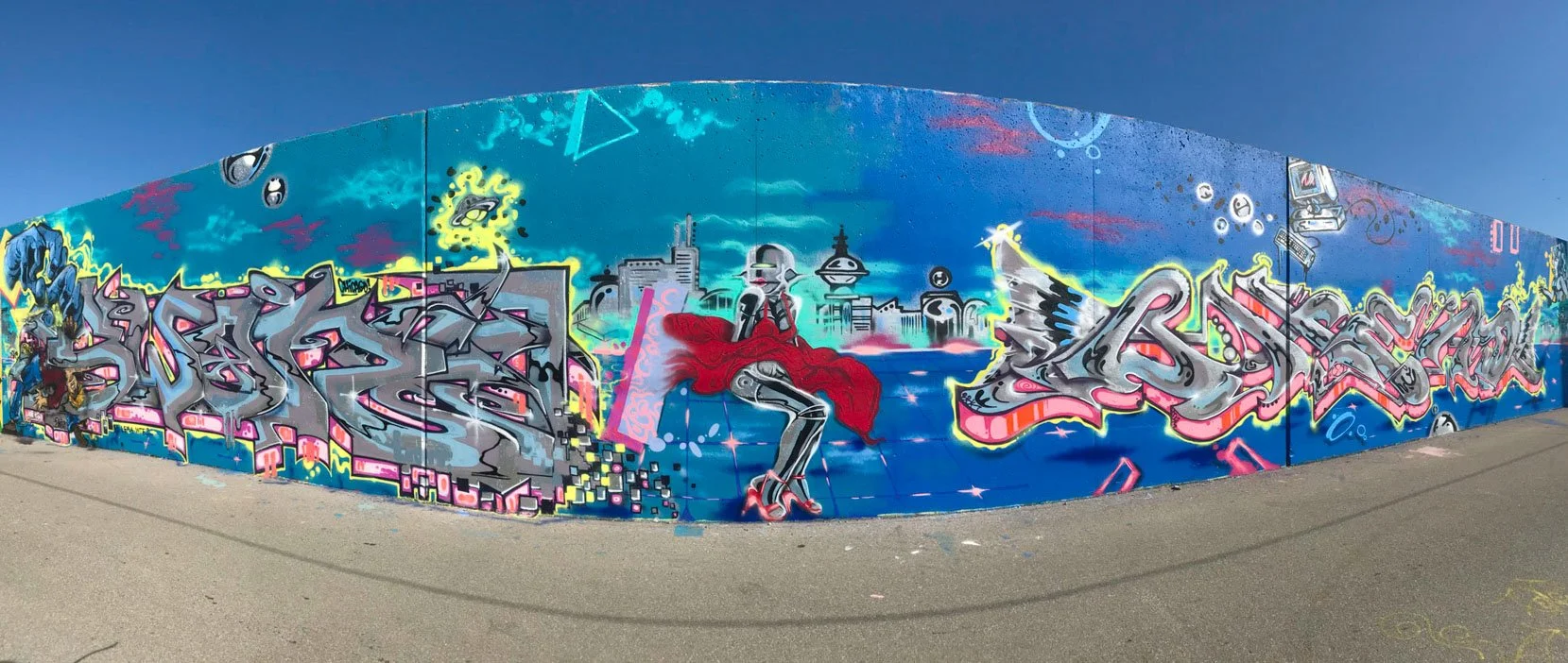

Through the Lens — What I See Every Time
Each time I photograph The Mural Mile, something different reveals itself:
one year it’s about color and energy
another year it’s about political tension
another year it’s playful, experimental, loose
sometimes it’s raw and aggressive
sometimes it’s poetic and quiet
That’s how you know it’s alive.
The wall doesn’t freeze a moment.
It documents motion.
Why The Mural Mile Matters to St. Louis
Because cities need spaces where creativity is allowed to breathe.
Graffiti is part of American visual history.
Because not all art belongs indoors.
Because young artists need to see possibilities at scale.
Because communities deserve visual proof that culture evolves.
The Mural Mile shows St. Louis as it really is: layered, resilient, expressive, and unafraid of change.
Conclusion: A Wall That Keeps Breathing
The Mural Mile isn’t finished—and that’s exactly why it matters.
Each year, it sheds old skin and grows new.
Each year, it invites new voices.
Each year, it refuses stagnation.
Through photography, I don’t try to freeze it in time. I document its continuum.
Because in St. Louis, this wall doesn’t just hold back water— it holds memory, movement, and the unapologetic language of the streets.