
Salt-N-Pepa, Naughty by Nature, Slick Rick & Busta Rhymes: Hip-Hop History at Wingate Field


THE WHAT IS HIP-HOP PROJECT · TWIHHP
Old-School Night at Wingate Field
Salt-N-Pepa, Naughty by Nature, Slick Rick, and Busta Rhymes brought hip-hop history back into a Brooklyn community space.
MARTIN LUTHER KING JR. CONCERT SERIESHip-Hop History Came Back Into Public Space
There was no glass between the history and the people.
There is a difference between learning about hip-hop history and standing in front of it.
On August 2, 2010, Wingate Field in Brooklyn became one of those places where the distinction disappeared.
Salt-N-Pepa.
Naughty by Nature.
Slick Rick.
And special guest
Busta Rhymes.
The concert was part of the Martin Luther King Jr. Concert Series, hosted by Brooklyn Borough President Marty Markowitz and presented free to the public.
That last detail matters.
Hip-hop emerged through public and community spaces— parks, recreation rooms, block parties, schoolyards, playgrounds, neighborhood centers, and streets.
A free concert carrying major artists back into a Brooklyn neighborhood continued that tradition.
The history was standing onstage.
The Visual Archive
The differences between the artists are part of the history.
The photographs reveal distinct performance languages: physical crowd command, women’s stage authority, narrative identity, surprise, DJ structure, style, movement, and shared regional memory.
Naughty by Nature
The crowd is part of the record.
Point. Move. Call. Answer. Repeat. Their performance language treated audience response as part of the music itself.


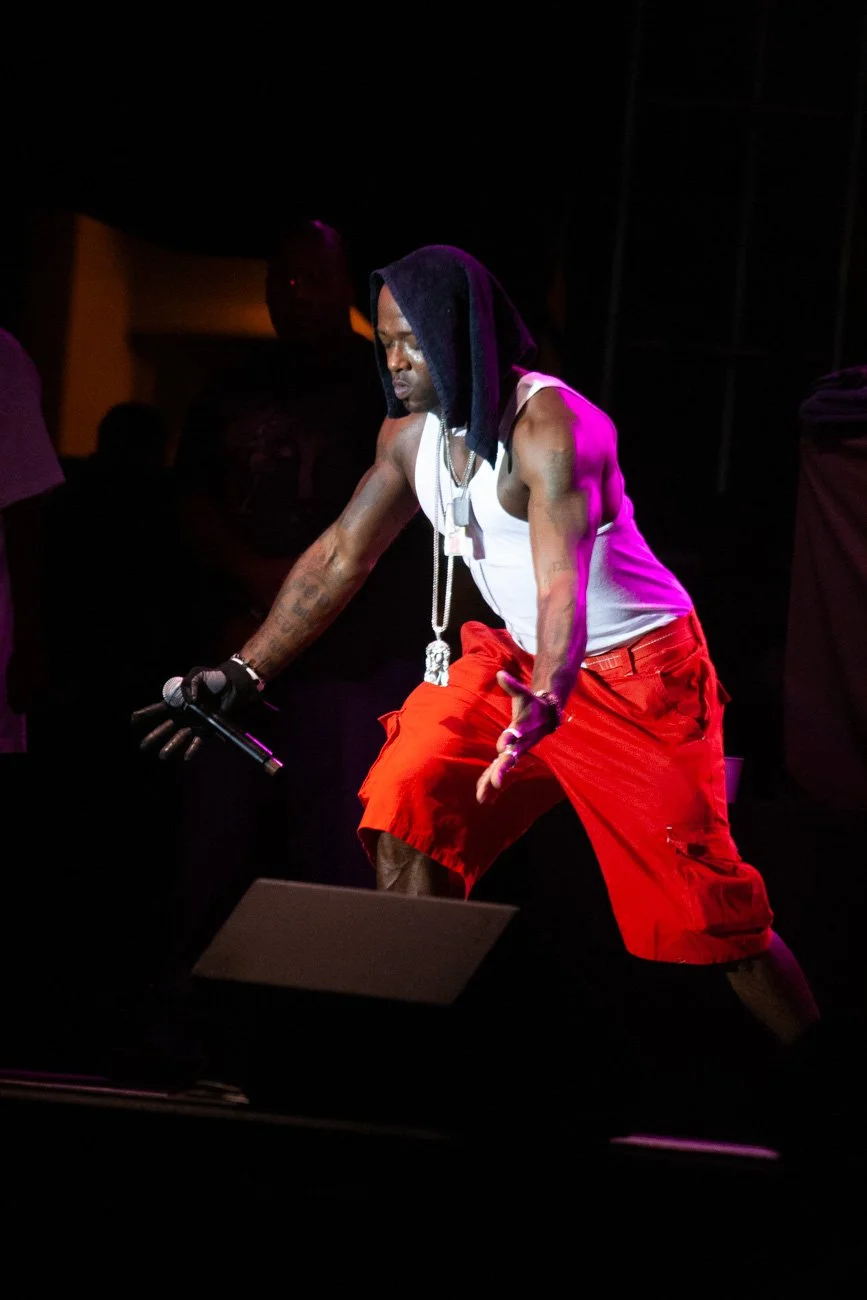


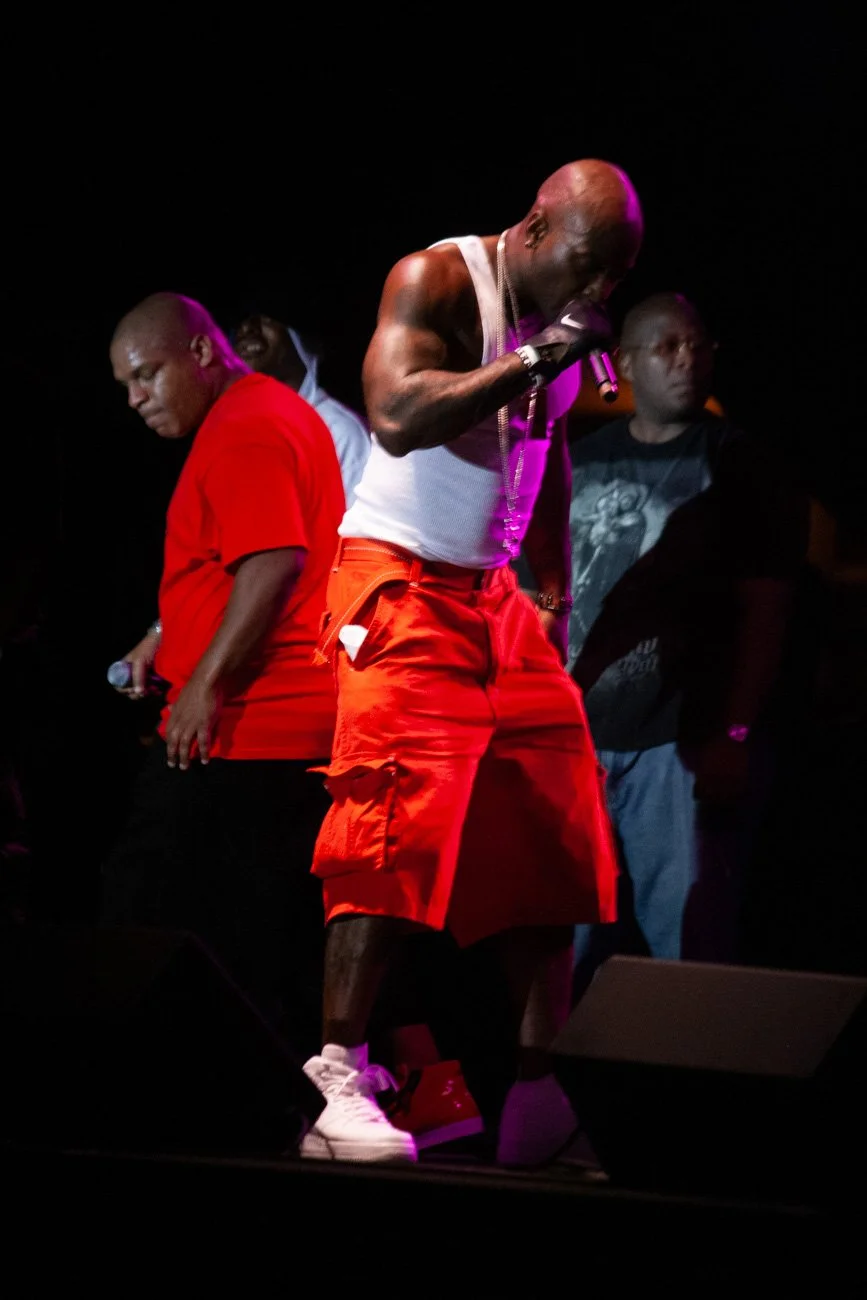
The audience is not expected to remain passive. That has always been one of hip-hop’s defining qualities.
The MC can deliver the record, but the performance is completed by what returns from the crowd.
Hands go up. Lyrics come back. People recognize the opening phrase before the verse finishes. Energy circulates between performer and listener.
Naughty by Nature also connected Brooklyn to the broader New York–New Jersey hip-hop corridor.
Records traveled. Mixtapes traveled. Radio traveled. Artists traveled. People traveled. Culture moved with them.
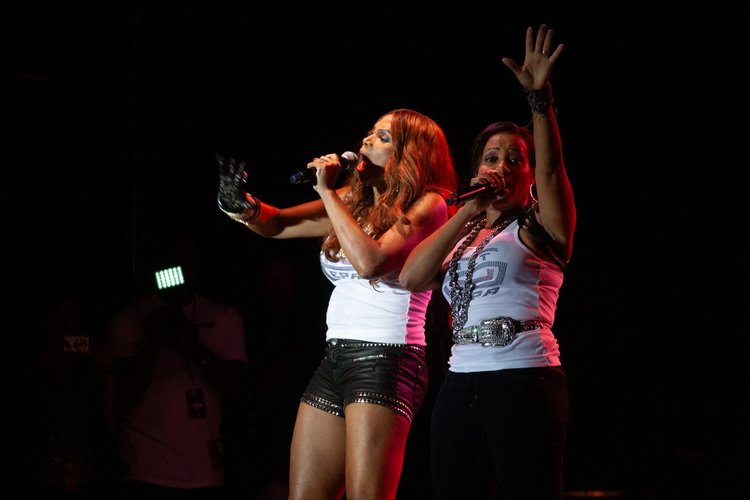
Salt-N-Pepa
Women at the center of the stage.
The microphones, jewelry, styling, stance, choreography, and eye contact function together as performance language.
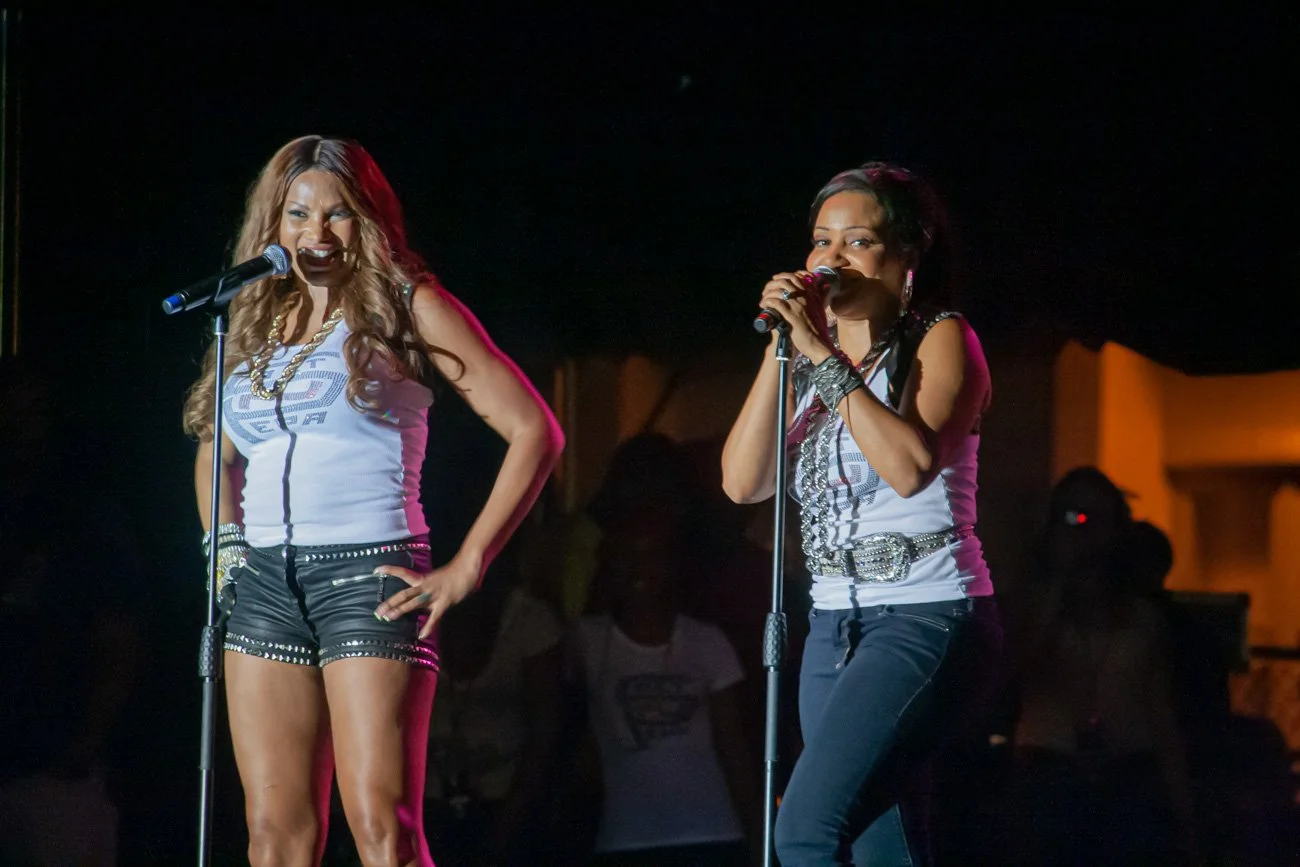
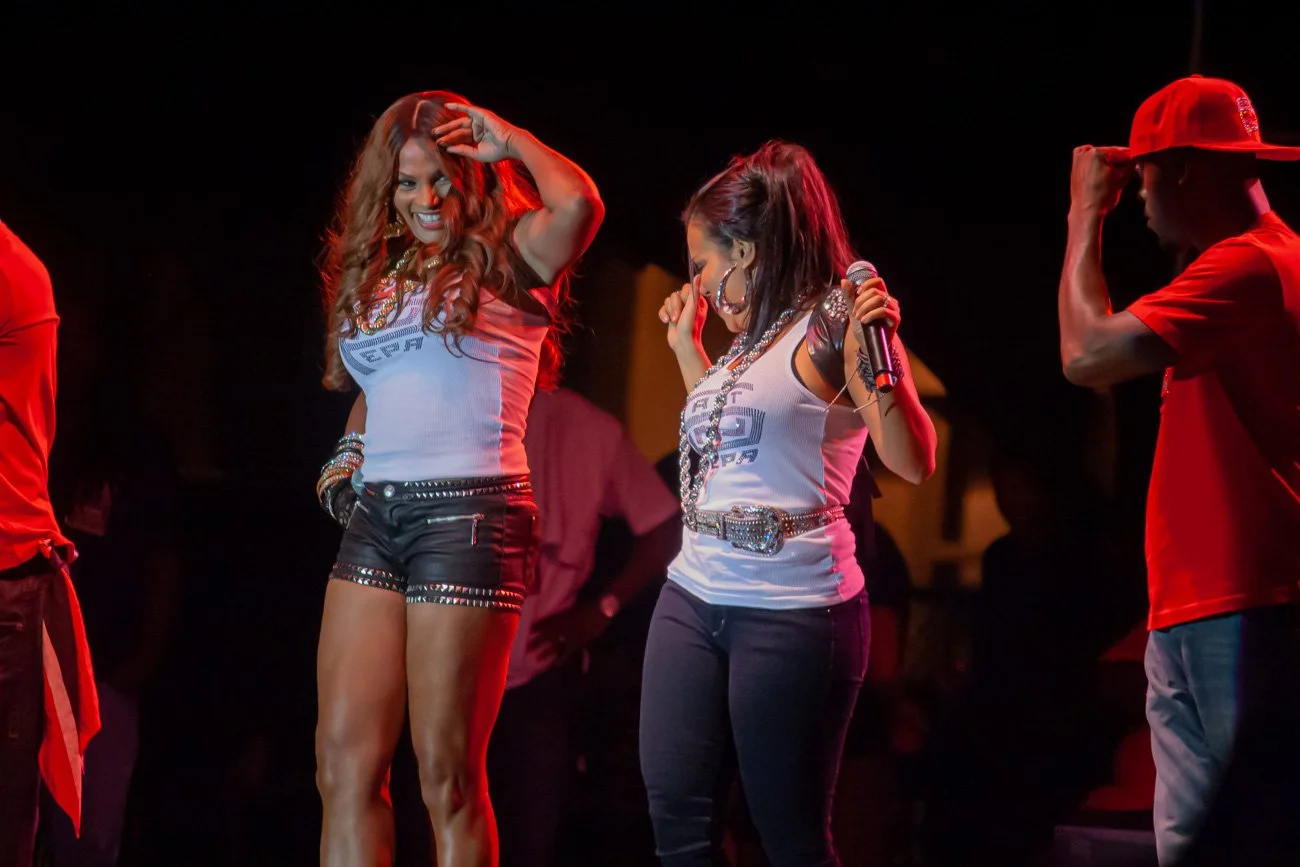

Women were never outside hip-hop waiting to be invited in.
They were already helping build it.
Salt-N-Pepa demonstrated that women could lead records, command major stages, shape fashion, influence language, and speak directly to audiences on their own terms.
These photographs are not simply portraits of recognizable artists.
They preserve women’s authority inside hip-hop history.
Slick Rick
Storytelling has a visual language too.
Before hearing a verse, the eyepatch, jewelry, vivid clothing, posture, and control already establish character.
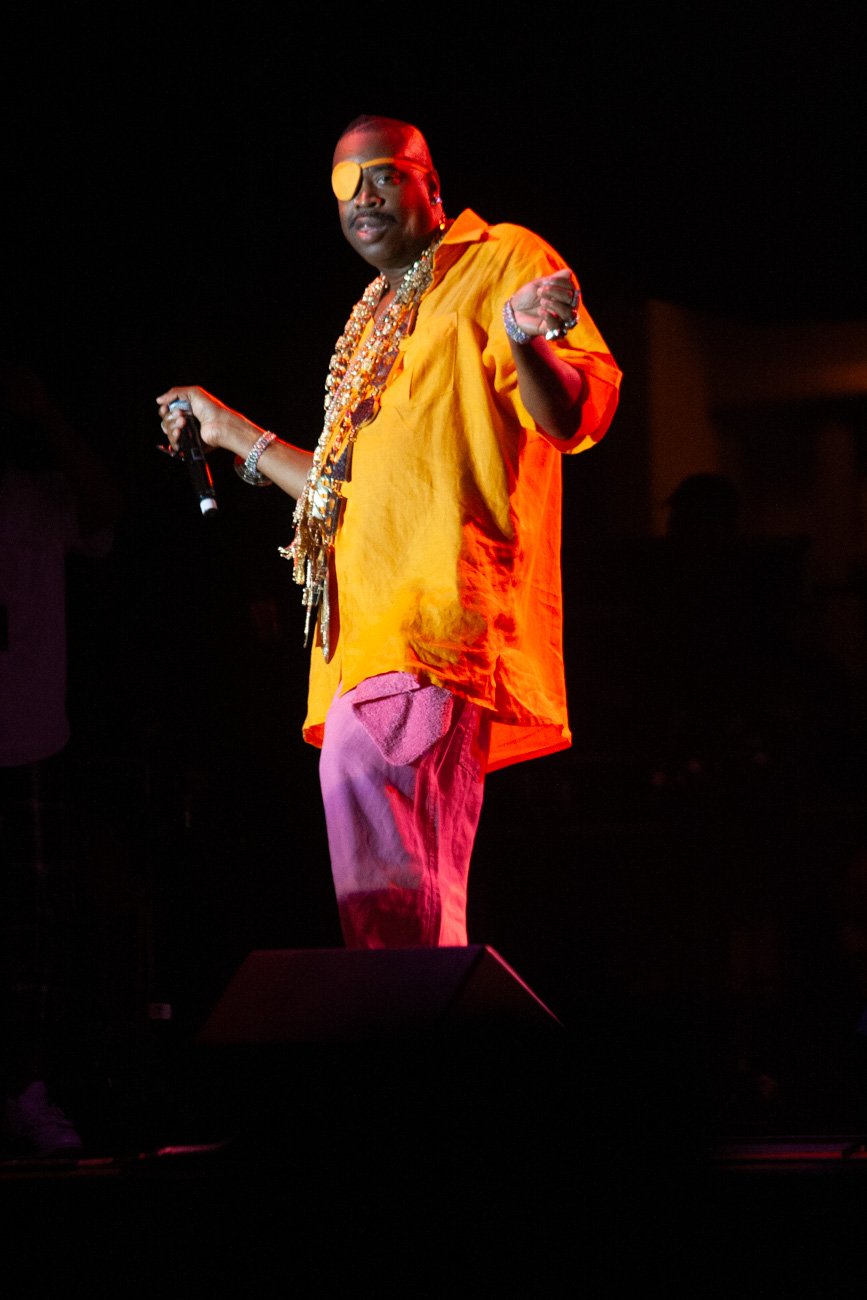


Slick Rick’s importance reaches beyond visual identity.
His work established storytelling as one of hip-hop’s deepest literary traditions.
Character. Pacing. Dialogue. Humor. Scene. Consequences. Voice.
A storytelling MC can document a neighborhood without a camera.
Language becomes the lens. The verse becomes the scene. The listener builds the image.
At Wingate Field, the photographer and storyteller briefly occupied the same archive.
Busta Rhymes
The unplanned moment becomes history.
A surprise guest changes the emotional structure of a concert. Recognition moves through the field before explanation is necessary.


Recorded music can be replayed indefinitely.
A surprise performance belongs to a specific group of people, in a specific place, at a specific time.
Eventually those people tell the story:
You should have been there.
Photography gives that sentence evidence.
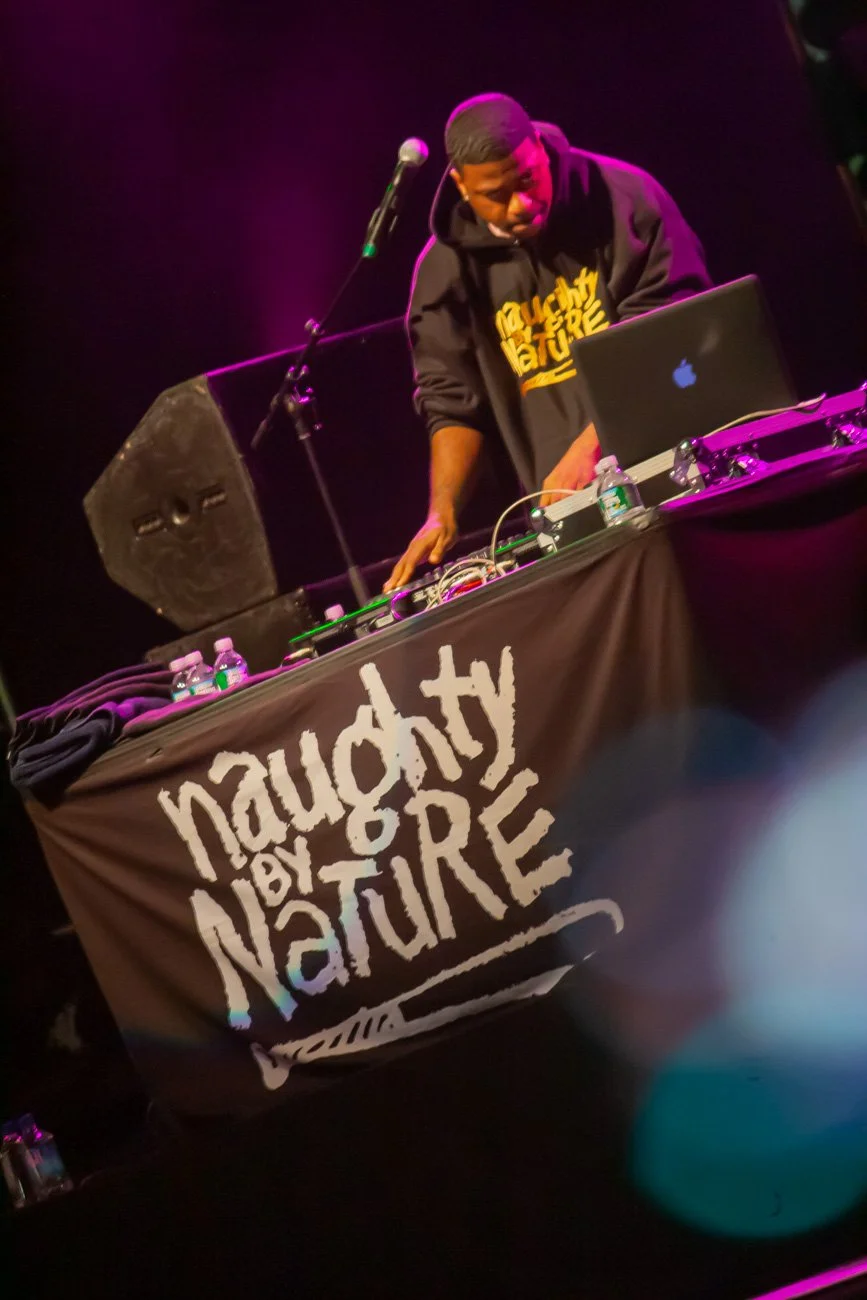
DJ Kaos
The structure behind the performance.
Hip-hop performance does not begin only when an MC steps forward. The DJ shapes the sonic environment holding the stage together.

Transitions matter. Timing matters. Anticipation matters. The next record matters.
A DJ can alter the emotional direction of a crowd without leaving the table.
The architecture of a hip-hop show extends beyond the person holding the microphone.
MC. DJ. Audience. Sound. Movement. Response.
Brooklyn Was Not Just the Location
The audience became part of the historical setting.
Wingate Field was not an interchangeable stage.
Brooklyn was part of the meaning.
The event took place around Crown Heights and East Flatbush, neighborhoods carrying Black and Caribbean histories, street culture, style, music, and generational memory.
When established artists perform inside a community rather than at a distance from it, something changes.
People who bought the early records stand beside younger listeners who know the songs through parents, older siblings, radio, sampling, or later cultural references.
History begins moving in both directions.
Backward through memory. Forward through transmission.
The audience becomes part of the archive.
“Old School” Is Not Another Word for Finished
Old school should mean foundation.
It describes methods, approaches, identities, and cultural practices later generations inherited.
Women’s Authority
Salt-N-Pepa
Their influence remains visible whenever women occupy hip-hop without asking permission to lead.
Crowd Participation
Naughty by Nature
Their influence survives wherever hard-edged records are engineered to move large crowds together.
Narrative Craft
Slick Rick
His influence remains inside character-driven storytelling, voice, pacing, dialogue, and scene.
Performance Force
Busta Rhymes
His influence remains visible in performances built on voice, animation, physical command, and impact.
Foundation does not disappear because time passes. Later structures stand on it.
A Public Archive in Motion
At Wingate Field, there were no display cases.
Museums matter. Books matter. Recorded interviews matter. Photography matters. Protected collections matter.
But hip-hop cannot be preserved only by removing it from everyday life.
The culture also has to move.
It has to be heard through speakers. Spoken into microphones. Played by DJs. Answered by crowds. Performed by the artists who helped create it.
At Wingate Field, the archive was alive.
Treach moving across the stage. Vin Rock pointing into the crowd. Salt-N-Pepa holding center. Slick Rick carrying decades of storytelling in his voice and visual presence. Busta Rhymes entering as the unexpected element. DJ Kaos working behind the performance. The community completing the exchange.
That is cultural preservation outside an institution.
Living Testimony
The photographs do not ask us to imagine whether the culture still mattered.
They show it.
The artists were there. The microphones were live. The DJs were working. The crowd was responding.
The foundation had not disappeared. It had simply aged into another chapter.
For the people who filled Wingate Field, August 2, 2010 was a concert.
For the archive, it became something else.
Living testimony.
The artists were still present.
The community was still listening.
And hip-hop was still moving.
Continue Through the Archive
Follow the culture, the stage, and Brooklyn memory.
Continue into related hip-hop preservation stories, performance photography, and New York visual history.
TWIHHP
Hip-hop as living history.
Artists, DJs, dance, events, neighborhoods, public memory, and preservation.
The Stage
Enter the performance archive.
Concerts, musicians, stage light, live movement, venues, crowds, and performance culture.
BLINK NY
New York as a living archive.
People, neighborhoods, artists, events, cultural memory, and public life.
Editorial Credits
